Franklin · Cool Springs · Brentwood
Commercial sealcoating and striping in Franklin, Tennessee
The cheapest work we do, and the work that decides how long the rest of the lot lasts.
Sealcoat, layout, striping and stencils in-house
Phased so the property keeps operating
ADA stalls laid out to current requirements
Protection, not cosmetics
Sealcoat is what keeps water out
Sealcoating looks like a cosmetic job, and that's why it gets deferred. What it actually does is keep water and UV out of the asphalt binder — and water getting into the binder is how almost every expensive repair on a parking lot starts.
A lot that gets sealed and striped on a sensible cycle stays a maintenance line item. A lot that doesn't turns into crack fill, then patching, then full-depth repair, then an overlay. The order never runs backwards. We would rather sell you the small job on a schedule than the large one in an emergency, and we will tell you when a lot is too far gone for sealcoat to be worth it — putting sealer over a failing surface just hides the failure for a season.
Striping is the other half. Faded lines cost you parking spaces, because drivers spread out when they can't see the stalls, and worn ADA markings are the thing tenants and inspectors notice first.
What we do
Sealcoating, striping, and everything painted on a lot
- Commercial sealcoating
Cleaned, edged, and sealed. Oil-spotted areas get primed first, because sealer will not bond over a fuel or oil stain and will lift there within months if you skip it.
- Crack fill before sealing
Hot crack fill goes in first where it's needed. Sealer bridges hairlines, not open cracks — sealing over a working crack just buys a neater-looking crack.
- Restriping existing layouts
Repainting the layout you already have, in the same lines, so nothing about how the lot is used changes. The most common job on this page.
- New layouts and re-layouts
Where the goal is more usable stalls, better circulation, or fixing an aisle that was never wide enough. We lay it out and mark it before anyone paints.
- ADA stalls, access aisles, and signage
Accessible stalls, hatched access aisles, the pavement symbol, and the post-mounted signs, laid out to current requirements. This is the part that gets flagged, and it's the cheapest part to get right.
- Directional markings and fire lanes
Arrows, stop bars, crosswalks, loading zones, no-parking hatching, and fire lane markings and curb paint.
- Custom stencils
Reserved and numbered spaces, tenant names, unit numbers, visitor and staff parking. Cut to whatever the property needs.
- Wheel stops, bollards, and signage
Supplied and installed with the same crew, so the lot is finished in one mobilization instead of waiting on another vendor.
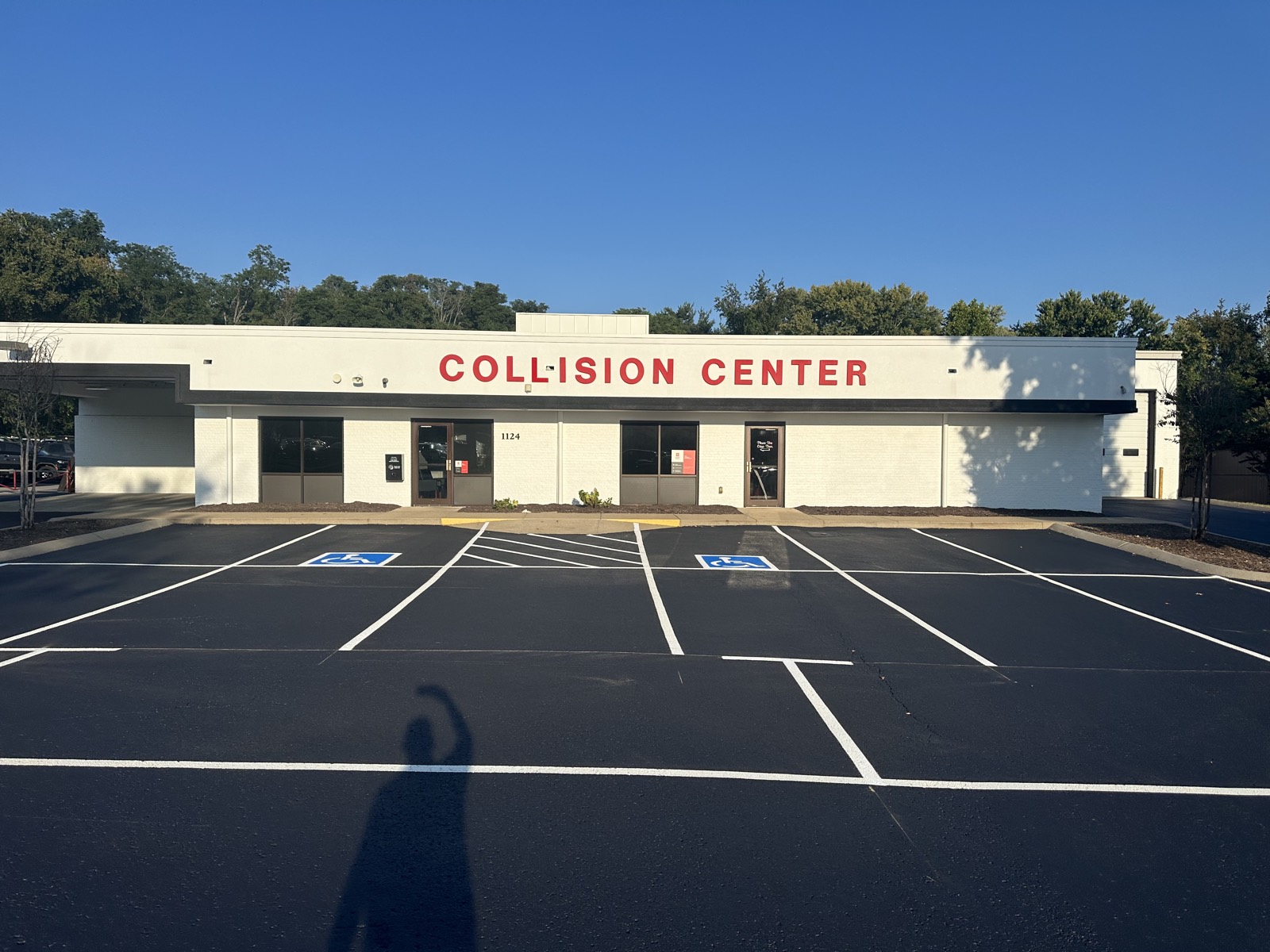
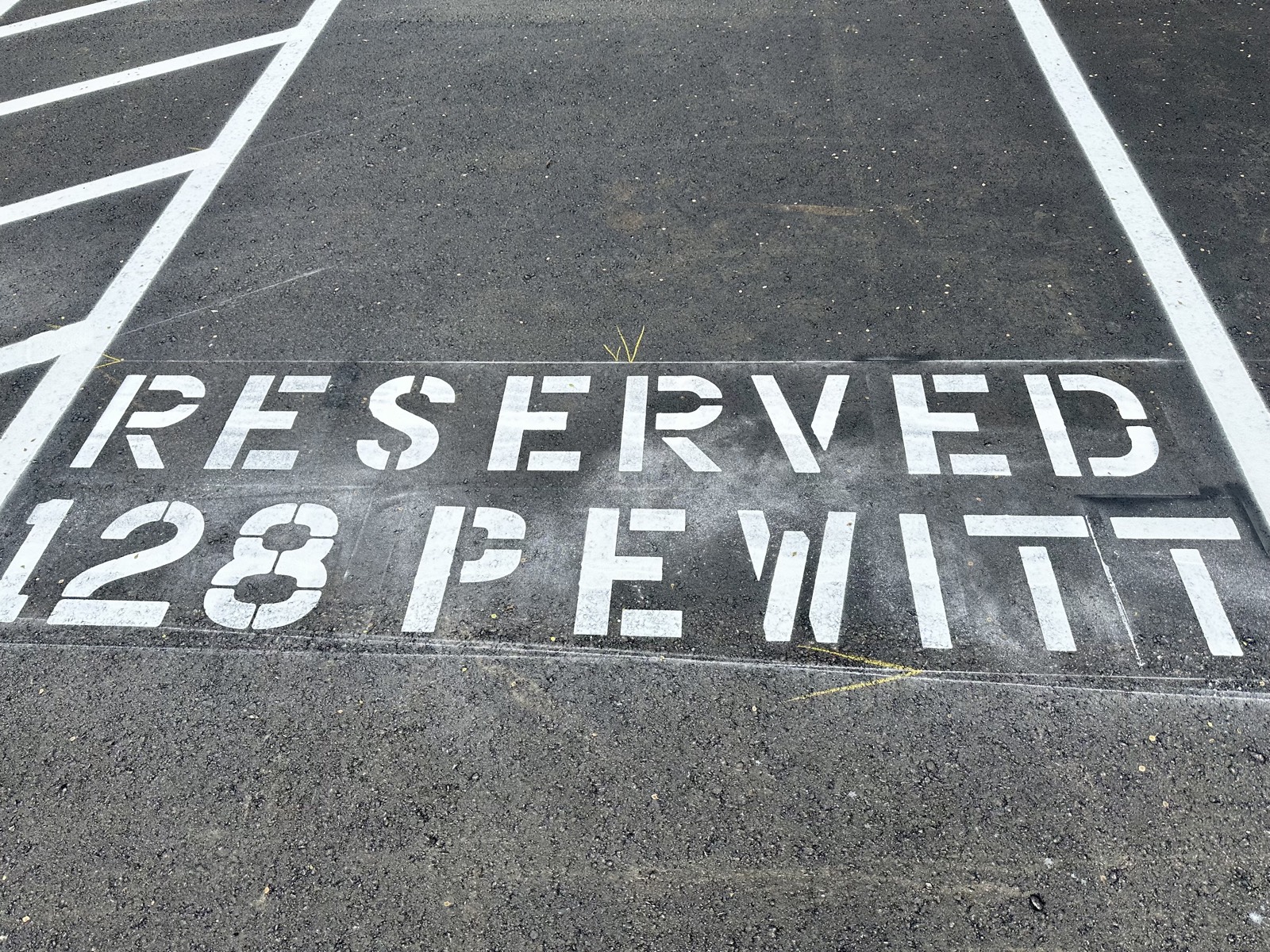
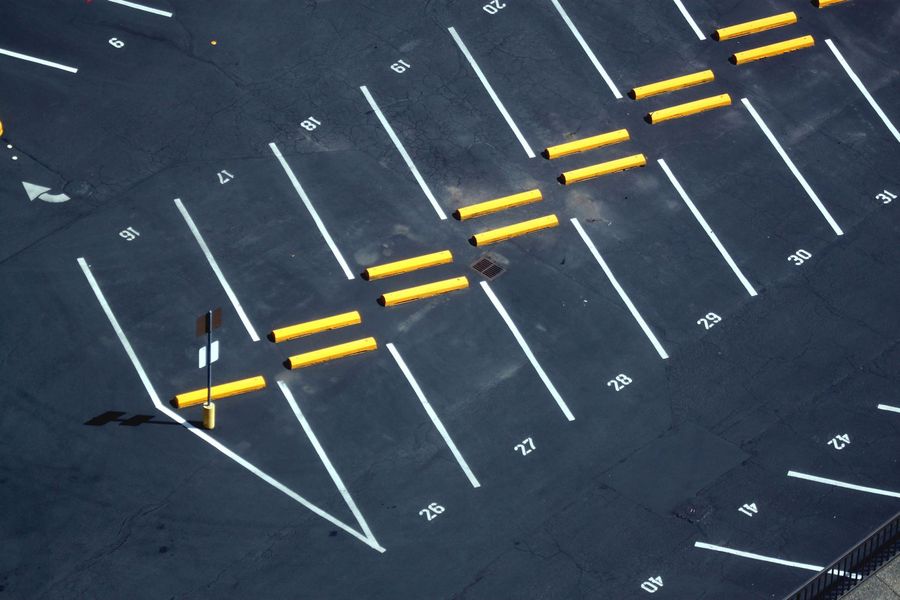
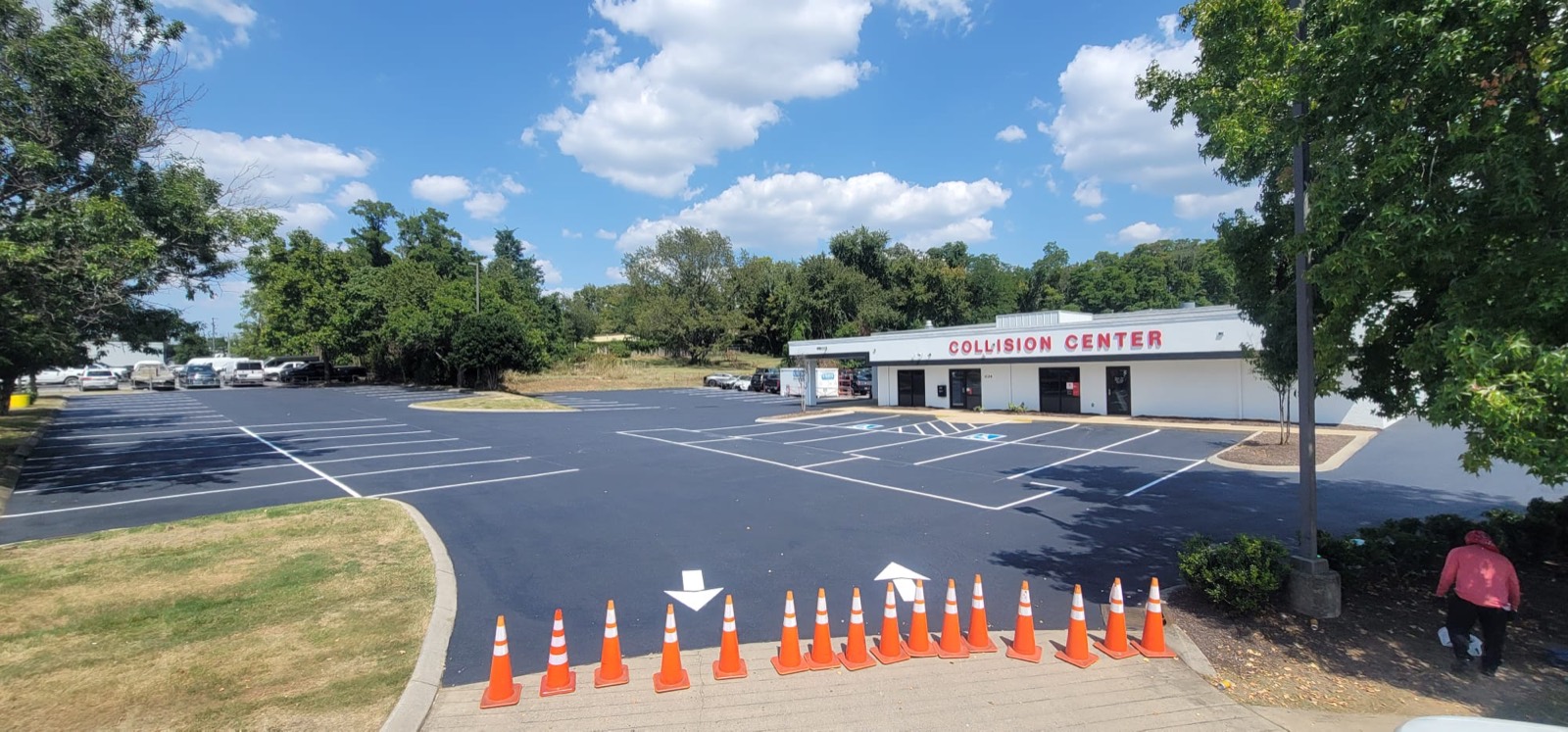
Sealcoating, striping, and custom stencil work completed by Pavement Solutions.
Properties we work on
The scheduling is the hard part
Sealcoating closes the area you're working in for a day. On an occupied commercial property, how that gets phased is the whole job.
Sectioned so storefronts and drive aisles stay reachable through business hours.
Phased by building with resident notice, so nobody comes home to nowhere to park.
Weekend and after-hours work where staff and patient parking cannot be lost during the day.
Truck aisles and dock aprons sealed around shipping schedules.
Weekday or summer-break work, cured and open before Sunday or before students return.
Multiple properties assessed together and put on a sealing cycle instead of handled one crisis at a time.
Timing
Sealcoat is weather work
This is the one service where the calendar genuinely decides the result, so it's worth being straight about it.
Sealer needs the surface and the air above roughly 50 °F and holding, with the mid-70s to high-80s ideal. Applied too cold it will not cure properly, and no amount of extra coat thickness fixes that.
It needs a dry window either side of the work. Most areas take traffic the next day, though shaded sections and cooler days want longer — we'll tell you the actual window for your lot, not a brochure number.
Paint goes down once the sealer has cured. Restriping on its own isn't weather-locked the same way, so a lot can be restriped well outside sealcoat season.
Why property managers call us
The part that isn't the sealer
We answer
The most common thing in our reviews is that we respond quickly and communicate through the job. That shouldn't be remarkable in this trade, but it is.
One contractor for the whole lot
Asphalt, concrete curbing and sidewalks, wheel stops, bollards, signage, sealcoating, and striping are all in-house. You aren't coordinating four vendors around one closure.
We work around your operation
On a 24/7 distribution warehouse we completed the lot in five days and installed 32 wheel stops without interrupting a single delivery. Most sealcoat jobs are far smaller — the point is the phasing, not the size.
We'll tell you to wait
If a lot needs repairs before it's worth sealing, or the weather window has closed, we'll say so. Sealer over a failing surface is money you spend twice.
Repeat work, not one-offs
A regional manager of a multi-family portfolio in Middle Tennessee has used us across her communities for four years. Most of our work comes from properties we've already been to.
Where we work
Franklin and thirty minutes around it
Our office is in Franklin, and most of our sealcoating and striping work is within thirty minutes of it — Franklin, Cool Springs, Brentwood, Nolensville, Thompson's Station, Spring Hill, and south Nashville. We also cover Williamson, Davidson, Rutherford, Wilson, Sumner, Maury, Cheatham, and Robertson counties, and we travel further for larger projects and for portfolio clients with properties across the state.
If you're not sure whether you're in range, call and ask. It's a short conversation.
Sealcoat & striping estimate
Tell us the property and roughly how many spaces
Sealcoating and striping are priced off area and stall count, so we can usually give you a realistic range from the property address and an approximate number of spaces — then confirm on site before anything is scheduled.
If you're working to a deadline — a tenant opening, an inspection, an event — say so and we'll tell you honestly whether the weather window supports it.
Mon–Fri 7 AM – 5 PM
Sat–Sun 8 AM – 5 PM
Questions we get asked
Before you call
How often should a commercial lot be sealed?
It depends far more on traffic and sun than on the calendar. A shaded, lightly used office lot goes much longer than a retail lot that takes delivery trucks and full sun all day. Rather than sell you a fixed cycle, we'll look at the surface and tell you whether it needs sealing now or whether you'd be paying early — and if it's early, we'll say so.
How long is the lot out of use?
Plan on the sealed area being closed for the day, with most areas taking traffic again the next day. We work in sections so the property keeps operating rather than closing the whole lot at once, and on sites that can't lose parking during business hours we schedule weekends or after hours.
Can you just restripe without sealcoating?
Yes, and it's very common. Restriping an existing layout is the cheapest thing we do and it's not tied to the sealcoat weather window, so it can be done through most of the year. If the surface is sound and only the lines have faded, restriping on its own is often all a lot needs.
Do you handle ADA stalls and the signs?
Yes — accessible stalls, the hatched access aisles, the pavement symbols, and the post-mounted signage, laid out to current requirements. It's worth doing at the same time as a restripe, because it's the part most likely to be flagged and the least expensive part to correct while the crew is already there.
What does sealcoating and striping cost?
It comes down to square footage, stall count, how much crack fill and oil-spot priming the surface needs first, and how the work has to be phased around your operation — which is why we don't publish a number we'd have to walk back. Send the property address and a rough stall count and we'll give you a realistic range, then confirm it on site.
Is it too late in the season?
Call and ask, because it depends on the forecast rather than the date. Sealer needs the surface above roughly 50 °F and holding, plus a dry window either side. If the window has closed we'll tell you straight and put you at the front of the schedule for the next one rather than applying it in conditions that won't cure.